Scholarships for College Students in India: The 2026 Guide to Government & Private Financial Aid

How would I pay the first semester’s fees?
It’s a conversation that plays out in thousands of Indian homes every year. Students work hard to secure admission, only to discover that tuition fees, hostel expenses, books, transport, and examination charges add up much faster than they expected.
Many families respond by taking education loans. Others postpone admissions. Some students even settle for colleges they never wanted to attend simply because they’re more affordable.
Yet there’s another option that often gets overlooked, and that is, scholarships.
What’s surprising isn’t that scholarships exist. It’s that many remain underutilised because students either assume they won’t qualify or discover them after the application deadline has passed.
If you’ve been searching for Scholarships for College Students, you’re already ahead of many applicants. This guide explains the opportunities available, who can apply, and how to improve your chances of receiving financial support without getting lost in complicated government terminology.
Not Every Scholarship is Meant for Toppers
Ask ten students why they haven’t applied for a scholarship, and you’ll hear similar answers.
“My marks aren’t good enough.”
“Those schemes are only for reserved categories.”
“I study in a private college.”
Most of these assumptions aren’t entirely true.
While some scholarships reward exceptional academic performance, many others are based on annual family income, gender, disability, community, state domicile, or even the course you’re studying.
That’s why the phrase Scholarships for Indian Students covers a much wider range of opportunities than people realise.
Think of scholarships as different doors rather than a single entrance. If one closes, another may still be open.
Scholarships, Grants and Education Loans: They Aren’t the Same Thing
Students often use these terms interchangeably, but they’re designed for different purposes.
| Financial Support | Do You Repay It? | Who Usually Provides It? |
| Scholarship | No | Government, companies, trusts, NGOs |
| Grant | Usually No | Government or institutions |
| Education Loan | Yes | Banks and financial institutions |
A scholarship reduces the cost of education before it becomes a financial burden. A loan helps you manage the expense now but creates a repayment responsibility later.
Neither is inherently better. Many students combine both. But if you’re eligible for a scholarship, it makes sense to explore that option first.
Where Do Most Students Actually Find Scholarships?
One mistake many first-time applicants make is relying on social media posts or forwarded messages.
Scholarship announcements travel quickly online, but not all of them are genuine.
A safer approach would be to start with official scholarship portals and recognised organisations.
For government-funded schemes, the National Scholarship Portal remains one of the most important places to check. It brings together multiple central and state scholarship programmes under one platform, making it easier to understand eligibility and submit applications.
Private organisations, charitable trusts, and companies also publish scholarship announcements on their official websites every year.
The important thing is checking regularly.
Because some schemes remain open for only a few weeks.
Government Scholarships For College Students Worth Knowing About
When students search for a government scholarship for college students, they’re usually hoping to find one programme that suits everyone.
Unfortunately, it doesn’t work that way.
Every scheme has different eligibility rules.
Still, these are among the most recognised options available today.
| Scholarship | Suitable For | Key Benefit |
| Central Sector Scheme | Undergraduate students with strong academic records | Annual financial assistance |
| National Scholarship Portal (NSP) Schemes | Various categories | Multiple central and state scholarships |
| AICTE Pragati | Female students in technical education | Tuition support |
| AICTE Saksham | Students with disabilities | Financial assistance for technical education |
| PM YASASVI | Eligible OBC, EBC and DNT students | Financial support for higher education |
| State Government Scholarships | State domicile students | Varies by state |
One practical tip: don’t stop after finding a single scheme.
Many students qualify for more than one but never check beyond the first result they see.
Private Scholarships Deserve More Attention Than They Get
Government schemes receive most of the attention, but private organisations have quietly expanded scholarship opportunities over the past few years.
Foundations established by companies often support students studying engineering, medicine, management, commerce and other professional courses.
Some well-known examples include:
- Reliance Foundation Scholarship
- Tata Capital Pankh Scholarship
- HDFC Bank Parivartan Scholarship
- ONGC Scholarship
- LIC Golden Jubilee Scholarship
- Aditya Birla Scholarship
Unlike many government schemes, these programmes may also consider leadership qualities, extracurricular achievements or personal statements alongside academic performance.
The Right Scholarship Often Depends on Your Course
Choosing scholarships randomly is a waste of time. But choosing them on the basis of your degree is much smarter.
Scholarship for Engineering Students
Engineering students have access to one of the widest ranges of scholarship programmes in India.
Apart from national schemes, many technical universities and private organisations offer financial assistance specifically for engineering education.
Students pursuing Civil, Mechanical, Electrical, Electronics, Computer Science or Chemical Engineering should regularly monitor AICTE notifications as well as scholarship announcements from recognised companies working in these sectors.
If you’re studying engineering then don’t assume every opportunity comes from the government.
Some of the most competitive scholarships today come from corporate foundations investing in future technical talent.
Scholarship for BTech Students
A Scholarship for BTech Students may come from more places than you expect.
Besides AICTE initiatives, several universities reward consistent academic performance through internal merit scholarships.
Women pursuing engineering also benefit from dedicated scholarship programmes designed to improve representation in technical fields.
Students entering their first year should ask one simple question during admission:
“Does this college offer institutional scholarships?”
Many do.
Few students ask.
Scholarship for Medical Students
Medical education is among the most expensive academic pathways in India.
That’s precisely why Scholarship for Medical Students plays such an important role.
Depending on the institution and state, medical students may be eligible for:
- Government medical scholarships
- AIIMS financial assistance
- ICMR research support
- State-funded medical education schemes
- NGO-backed healthcare scholarships
Some teaching hospitals also maintain student welfare funds that receive far fewer applications than national scholarship programmes.
It never hurts to ask.
Before You Apply, Ask Yourself One Question
“Do I actually meet the eligibility criteria?”
It sounds obvious.
Yet every year, thousands of applications are rejected because students apply first and read later.
Most scholarship providers consider factors such as:
- Academic performance
- Annual family income
- Category or reservation status
- State domicile
- Admission into a recognised institution
- Course of study
Here’s something many applicants don’t realise:
Being eligible for one scholarship doesn’t automatically make you eligible for another.
Treat every application as a separate process.
Before You Click ‘Apply’, Keep These Documents Ready
Imagine finding the perfect scholarship only to realise your income certificate expired two weeks ago.
It happens more often than you’d think.
Most scholarship portals don’t reject applications because students aren’t deserving. They reject them because the paperwork is incomplete or inconsistent.
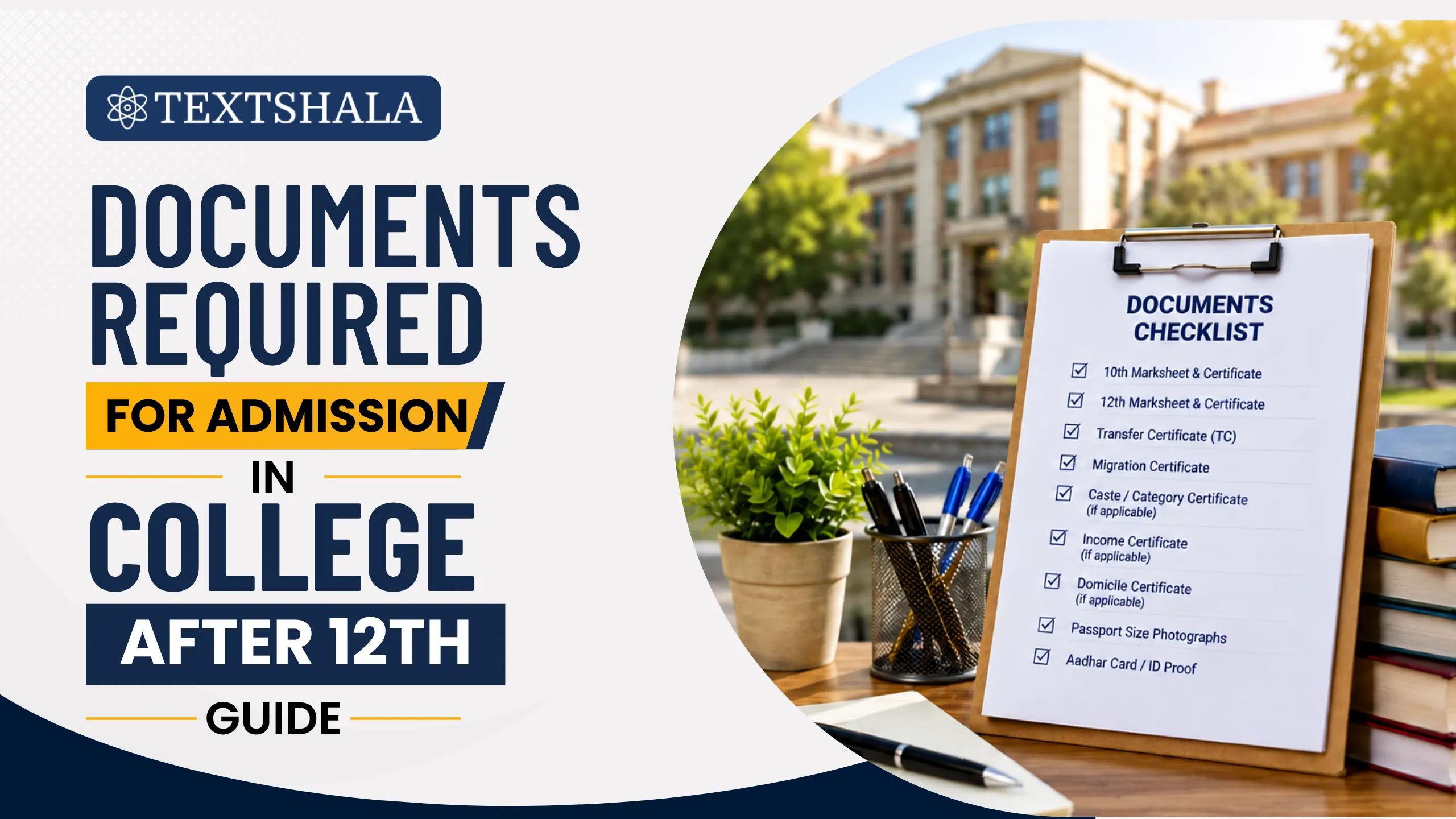
Before applications begin, create a folder with these documents:
- Aadhaar Card
- Recent passport-size photograph
- Income Certificate
- Previous year’s marksheets
- Bonafide Certificate from your college
- Admission Letter
- Fee Receipt
- Bank Account details linked to Aadhaar
- Caste or Category Certificate (if applicable)
- Disability Certificate (if applicable)
- PAN Card (where required)
Scanning these documents in advance saves a surprising amount of stress later.
Applying for a Scholarship For College Students Isn’t Difficult. Rushing It Is.
Many students assume scholarship applications are complicated because they involve government portals.
In reality, most follow the same basic process.
- Identify scholarships you’re genuinely eligible for.
- Register on the official portal.
- Fill in your details carefully.
- Upload the required documents.
- Review everything once more.
- Submit the application.
- Keep a copy of the acknowledgement receipt.
One habit worth developing is checking your registered email regularly after applying. Scholarship authorities often ask for clarification or document verification, and missing that email can delay—or even cancel—your application.
Why Good Applications Still Get Rejected
This is the part students rarely talk about.
Rejections don’t always happen because someone else scored higher.
Sometimes they’re caused by simple, avoidable mistakes.
The most common ones include:
- Applying after the deadline
- Uploading blurred or unreadable documents
- Incorrect bank account details
- Income certificates that don’t match official records
- Duplicate applications
- Applying for scholarships without meeting the eligibility criteria
Think of your application as an official document rather than just another online form.
Small errors matter.
Five Habits That Improve Your Chances
There’s no guaranteed formula for receiving financial aid, but certain habits consistently help.
Apply Early
Scholarship portals often become slow during the final few days.
Avoid unnecessary stress by submitting well before the deadline.
Don’t Stop After One Application
Many students search for one perfect scholarship.
Successful applicants usually apply for several.
As long as the scheme allows it, there’s no reason to limit yourself.
Maintain Your Academic Performance
Not every scholarship is purely merit-based, but consistent academic performance strengthens almost every application.
Write Honestly
If you’re asked to submit a personal statement, avoid writing what you think reviewers want to hear.
Explain your circumstances clearly.
Specific stories are usually more convincing than generic claims.
Stay Organised
Create a spreadsheet with scholarship names, deadlines, required documents and application status.
It sounds simple, but it prevents missed opportunities.
Government or Private Scholarship: Which Should You Prioritise?
Rather than choosing one over the other, consider applying for both whenever you’re eligible.
| Feature | Government Scholarships | Private Scholarships |
| Funding Source | Central or State Government | Companies, NGOs, Trusts |
| Eligibility | Policy-based | Varies by organisation |
| Competition | Usually High | Moderate to High |
| Selection Process | Standardised | May include essays or interviews |
| Financial Support | Fixed as per scheme | Can vary significantly |
Government schemes often receive more applications simply because more students know about them.
Private scholarships, on the other hand, may have fewer applicants despite offering substantial financial assistance.
One Final Thought
Students often think scholarships are something you look for after admission.
In reality, the search should begin much earlier.
If you’re exploring:
- Scholarships for College Students
- Scholarships for Indian Students
- Government Scholarship for College Students
- Scholarship for Engineering Students
- Scholarship for Medical Students
- Scholarship for BTech Students
Then scholarships can help you reduce the cost of education but succeeding in college also depends on having the right learning resources.
Students preparing for engineering, medical, management or competitive examinations can explore TextShala’s collection of genuine academic books from trusted publishers, making it easier to continue learning without spending time searching across multiple websites.
Questions Students Ask the Most
Who is eligible for Scholarships for College Students in India?
Eligibility depends on the scholarship. Academic performance, annual family income, reservation category, state domicile, disability status and the course you’re pursuing are some of the most common factors considered.
Can engineering students apply for multiple scholarships?
Yes, in many cases they can. However, some scholarship providers restrict students from receiving multiple financial awards simultaneously. Always read the terms carefully before accepting an offer.
Are there scholarships specifically for medical students?
Yes.
Several organisations offer dedicated Scholarship for Medical Students, including state governments, AIIMS, ICMR, charitable trusts and private foundations.
Which scholarship is best for BTech students?
There isn’t one universally “best” option.
AICTE scholarships, state government schemes, institutional merit scholarships and private foundation programmes are all worth exploring if you’re pursuing a BTech degree.
Can private college students receive government scholarships?
Absolutely.
Many government schemes are available to students enrolled in recognised private institutions, provided they satisfy the eligibility requirements.
Who is eligible for the Reliance Foundation Scholarship?
Eligibility varies each year, but the programme generally supports first-year undergraduate students based on merit, financial need and other criteria announced in the official notification.
Always refer to the latest eligibility guidelines before applying.
What are the four main types of scholarships?
Most scholarships fall into four broad categories:
- Merit-based
- Need-based
- Government-funded
- Private or Corporate-sponsored
Some schemes combine more than one of these criteria.
How do I apply for the PM scholarship schemes?
Different PM-linked scholarship programmes have different eligibility rules.
Most applications are submitted through the relevant official government portal during the announced application period.
Avoid relying on unofficial websites or social media links.
Can I get a 100% scholarship?
Yes, although they’re highly competitive.
Some government institutions, universities and private organisations provide scholarships that cover tuition fees entirely, while others also include hostel or maintenance allowances.
Are scholarships taxable in India?
Scholarships awarded to support education are generally exempt from income tax under Indian tax laws. However, students should consult the latest government guidelines or a qualified tax professional for specific cases.